Cooking in a Charcoal Pan
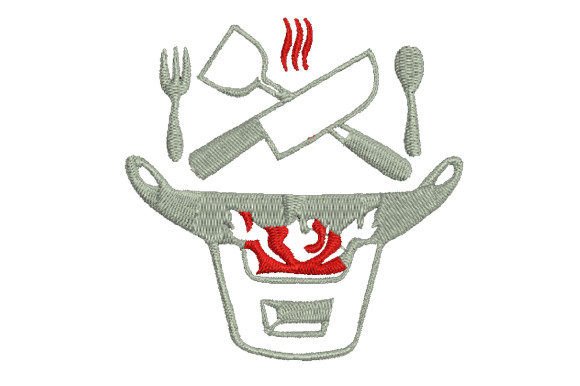
When I first opened Cooking in a Charcoal Pan, I immediately felt the warmth of a bustling Thai street kitchen. This embroidery design is not just a decorative element—it carries a story. The charcoal pan motif, with its rounded basin and glowing ember suggestion, creates a mood that is both rustic and deeply authentic. As a designer who has tested hundreds of food-themed embroidery files, I can tell you this one has a certain unpolished charm that actually works in its favor. It feels like a logo, yes, but more than that, it feels like a memory of real cooking, the kind where smoke rises and flavors deepen over slow heat.
The design was clearly inspired by the way so many Thai dishes come to life on charcoal stoves. That cultural root gives Cooking in a Charcoal Pan a personality that mass-produced, generic food embroidery files simply lack. The shape language is straightforward, the layout suggests a badge or emblem, and the overall visual personality leans toward earthy, handmade, and genuine. For anyone who loves food culture or wants to bring a touch of Southeast Asian culinary tradition into their embroidery project, this design immediately sparks ideas.
First Impressions and the Mood It Creates
What strikes me first about Cooking in a Charcoal Pan is how unpretentious it is. There is no over-styling, no forced elegance. Instead, you get a design that feels like it belongs on a well-worn apron hanging in a family-run restaurant. The charcoal pan sits at the center, and the surrounding elements—likely text or subtle accent lines depending on the exact file layout—frame it like a badge of honor. This is a design that celebrates the tool, not just the food, and that is a refreshing angle in the Food category of machine embroidery.
For a restaurant owner looking to brand their team apparel, this design would be a natural fit. I can already picture it stitched onto a heavyweight cotton apron in deep charcoal thread, or maybe reversed out in a warm terracotta tone on a natural linen background. The mood it creates is one of tradition, slow cooking, and honest flavor. That emotional hook is something every Etsy seller or small shop product creator should pay attention to—buyers respond to feeling, not just visuals.
Where This Design Truly Belongs
After studying the composition of Cooking in a Charcoal Pan, I started mentally placing it on different products. Some designs are versatile, and some have a clear home. This one leans toward the latter, and that is actually a strength. It belongs on items that connect to cooking, dining, and kitchen culture. Think about these natural fits:
- Aprons for restaurant staff, home cooks, or barbecue enthusiasts
- Kitchen towels and tea towels as part of a curated handmade kitchen set
- Tote bags for farmers market runs or grocery shopping
- Pillow covers in a rustic or industrial-style kitchen nook
- Custom apparel like a unisex sweatshirt for a food pop-up event
- Embroidered patches that can be sold individually or applied to denim jackets
I would not immediately reach for this design when working on a baby item or nursery decor. The charcoal pan theme, while warm, does not quite translate to a soft, infant-friendly aesthetic. However, if you are building a craft business around culinary-themed products, Cooking in a Charcoal Pan could become a signature piece in your lineup. The key is placing it where the story makes sense.
A Real-Life Scenario: The Tote Bag Test
Let me walk you through a practical example. I recently prepared a sample using a midweight canvas tote bag in natural beige. The idea was to create a reusable shopping bag that felt like it came from a specialty food market in Chiang Mai. I hooped the fabric carefully with a medium-weight cutaway stabilizer, because canvas can shift and distort under dense stitching if you are not cautious.
After stitching out Cooking in a Charcoal Pan in a two-tone thread palette—deep espresso brown for the pan outline and a muted burnt orange for the charcoal glow—the result was striking. The design read clearly from a distance, and up close, the stitch texture gave it a handcrafted, almost block-printed quality. I hung the finished tote bag on a hook and watched people react during a small craft fair. The design drew in home cooks and food lovers immediately. One person asked if it was a logo for a real restaurant. That kind of buyer engagement is exactly what you want from a well-chosen embroidery file.
Stitching Clarity and Visual Appeal
From a technical perspective, Cooking in a Charcoal Pan benefits from a clean, logo-style layout. The forms are distinct enough that even at a reduced size, the charcoal pan remains recognizable. This is critical for stitching clarity on products like caps or small patches, where fine details can easily blur into a mess of thread. I advise testing the design at multiple scales before committing to a production run. What looks crisp at four inches wide might lose definition at two and a half inches, especially if the design includes any small text or thin accent lines.
The stitch density appears balanced for the subject matter. A charcoal pan is a solid, weighty object, and the embroidery should reflect that. I would expect a mix of satin stitch for borders and fill stitch for the body of the pan, with possibly some running stitch details for texture or highlights. If the file uses a dense fill, you will need to be mindful of fabric selection. Lightweight or stretchy fabrics can pucker under heavy stitching, so always pair this design with a reliable stabilizer and consider a topper for textured or napped fabrics like fleece or terry cloth.
Fabric and Surface Considerations
Where should you use Cooking in a Charcoal Pan with extra care? I have a few surfaces that immediately come to mind:
- Thin fabric like lightweight jersey or sheer linen—stabilize aggressively and test first
- Stretchy fabric such as performance tees or baby onesies—the design may distort if not hooped perfectly
- Dark fabric—check that your thread colors contrast enough; charcoal on black can disappear
- Curved surfaces like caps or hat fronts—the pan shape may warp if not digitized for a cap frame
- Layered garments with seams or zippers nearby—avoid stitching over bulky intersections
For sweatshirt embroidery, this design can work beautifully on the chest or upper back, but I would recommend a test run on a scrap piece of similar fleece to dial in your tension. The plush texture of a sweatshirt can swallow fine details, so you might need to scale the design up slightly or adjust your thread weight. For tea towels and aprons, the flat weave of linen or cotton drill provides an excellent foundation, and the finished product will look professional and giftable.
Giftability and Customer Trust
If you sell personalized gifts or holiday embroidery items, the emotional resonance of a design matters enormously. Cooking in a Charcoal Pan taps into a specific, passionate niche—people who love cooking over fire, who appreciate traditional methods, and who connect with Thai food culture. When a customer sees this design on a product, they are not just buying an embroidered item; they are buying into a story. That builds customer trust and makes your handmade product feel intentional rather than generic.
For a holiday gift, imagine pairing this embroidery with a set of handmade spice blends or a charcoal-grilled recipe book. The presentation becomes cohesive, and the perceived value of the finished product rises. A boutique brand could use Cooking in a Charcoal Pan across a coordinated line—matching aprons, oven mitts, and tea towels—creating brand consistency that feels polished and memorable.
Practical Designer Notes Before You Stitch
Over the years, I have learned that rushing into a project without a few precautionary steps can waste time, fabric, and thread. Here is what I recommend before you commit Cooking in a Charcoal Pan to a final product:
- Test the design on scrap fabric that matches your final material as closely as possible
- Check thread color contrast against at least two different fabric backgrounds—light and dark
- Review stitch density in the preview software; dense areas should not feel stiff or bulletproof
- Confirm your hoop size accommodates the design comfortably without crowding the edges
- Inspect small details in a black-and-white mockup to see if the silhouettes hold up without color
- Use a proper stabilizer for your fabric type—cutaway for knits, tear-away for wovens, and a topper for fluffy textures
- Verify licensing terms before selling finished items or using the design in commercial embroidery projects
I always stress that last point. Just because you purchased a digital embroidery file does not automatically mean you can churn out products for a craft business or list them on Etsy. Check the seller's license agreement. Some designers allow limited commercial use, others require an extended license, and some restrict use to personal projects only. This is especially important for a logo-style design like Cooking in a Charcoal Pan, which a restaurant might want to use for actual branding.
How the Design Holds Up Over Time
Durability is a practical concern that often gets overlooked in the excitement of a new embroidery project. If you are stitching Cooking in a Charcoal Pan onto items that will see frequent washing—aprons, kitchen towels, sweatshirts—you need to think about how the design ages. Dense stitching can become abrasive if the back is not cleanly finished, and loose thread ends can snag in the wash. I recommend using a soft backing or a cover stitch on the reverse side for garments that touch the skin, and always pre-wash your fabric to prevent shrinkage from distorting the embroidery later.
For embroidered patches, the design translates well because the badge-like layout naturally suits a patch format. Add a merrowed border or a clean satin-stitch edge, and you have a product that can be sewn onto jackets, backpacks, or even grill covers. The patch route also simplifies the challenge of stitching on difficult fabrics—you only need to embroider once on stable patch material, then attach the patch wherever you like.
Final Thoughts From the Worktable
I have reviewed countless food-themed embroidery files, and many of them fall into the trap of being too cute, too cartoonish, or too generic to feel meaningful. Cooking in a Charcoal Pan avoids all of that by leaning into a specific cultural reference and a utilitarian aesthetic. It is not trying to be everything to everyone, and that restraint is exactly what makes it valuable for the right project.
If you are an apparel decorator looking for a unique restaurant-themed design, a digital product seller building a collection of culinary embroidery assets, or a creative entrepreneur planning a coordinated kitchen line, this design deserves a spot on your shortlist. Test it thoroughly, pair it with fabrics that honor its rustic roots, and watch how customers respond to the story it tells. In a market flooded with generic food motifs, Cooking in a Charcoal Pan stands out by staying true to its origins—and that is exactly the kind of embroidery design that builds lasting product value.