Roses Hearts ITH: A Designer's Practical Review
First Impression: A Design That Feels Both Soft and Statement-Making
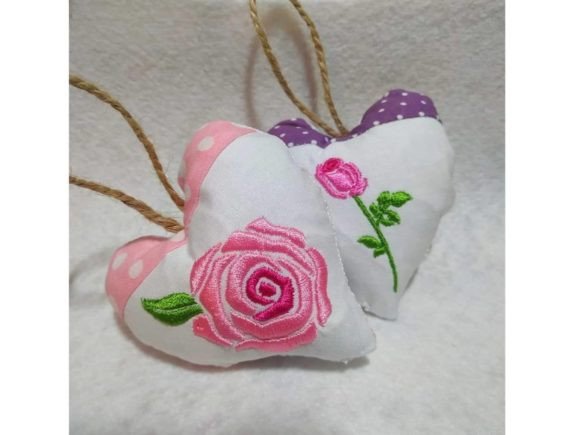
When I first opened the Roses Hearts ITH file and previewed the stitch map, my immediate thought was how well it balances two things that often clash in machine embroidery design: romantic softness and visual clarity. The heart shape is immediately recognizable, but the rose elements layered into it give the design a dimensional, almost hand-illustrated feel. This is not a flat, generic heart outline. It reads like a thoughtful composition, and that matters a lot when you are picking a design that needs to carry emotional weight on a finished product.
I have tested hundreds of embroidery files over the years, and the ones that earn repeat use in my projects are the designs that create a mood the moment someone sees them. The Roses Hearts ITH does exactly that. It feels romantic without being overly delicate, and sturdy enough to hold up on textured fabrics without losing definition. The description mentions a romantic gift, a stylish bag accessory, and home decor, and honestly, I can see it working naturally in all three categories without forcing the fit.
The Romantic Mood That Sells
There is a quiet confidence in how the rose petals are arranged inside the heart boundary. The shapes feel organic, not stiffly symmetrical, which gives the embroidery a more handmade, artisanal quality. For anyone selling on Etsy or at craft fairs, that perceived handmade quality is often what tips a browser into a buyer. A design that looks too mechanically perfect can sometimes feel mass-produced. The Roses Hearts ITH avoids that trap by keeping the floral elements slightly whimsical while the heart outline anchors everything into a clean, giftable shape.
I also appreciate that the design does not scream a specific holiday, even though it fits beautifully into Valentine's Day collections. The rose heart motif is timeless enough for wedding gifts, anniversary products, Mother's Day items, and even nursery decor if you soften the thread palette. That versatility extends the selling window far beyond February, which is something every small shop owner should think about when investing in a new digital embroidery file.
Real Project Test: Stitching a Custom Tote Bag
I decided to test the Roses Hearts ITH on a medium-weight canvas tote bag, the kind I often use for personalized gift orders and boutique accessories. My goal was to see how the design reads from a typical viewing distance and whether the stitch density holds up on a fabric that has a bit of natural texture. I hooped the tote with a firm cutaway stabilizer, selected a deep burgundy for the roses and a soft blush pink for the accent petals, and let the machine run.
The result was genuinely impressive. The satin stitch borders on the heart outline gave the shape a crisp, polished edge, while the fill stitch inside the roses created a smooth, almost velvety surface. Even the smaller inner details, like the leaf hints and the subtle curves where petals overlap, stitched out cleanly without excessive trims or thread breaks. The design sat flat on the tote fabric, no puckering, no pulling, and the back of the embroidery looked neat enough that I would feel confident selling this as a finished product without an additional backing cover.
From a customer perspective, the embroidered tote felt elevated. It looked like a boutique product, not a quick craft project. That is the kind of result that builds repeat buyers and positive reviews for any craft business.
Fabric Choices and Hoop Size Awareness
While the design performed beautifully on a sturdy tote, I would strongly recommend testing the Roses Hearts ITH on your specific fabric before committing to a large batch. The design has a moderate amount of detail in the rose centers, and on highly textured fabrics like thick terrycloth or loosely woven linen, some of that finer detail could soften or blur. A medium-weight cotton, twill, denim, or quality felt will give you the cleanest stitch definition.
Stretchy fabrics, like jersey knits or performance wear, need extra attention. If you plan to use this design on a sweatshirt or a baby onesie, you will want a no-show mesh stabilizer or a fusible knit backing to prevent distortion during stitching and after washing. The heart shape is forgiving enough that minor fabric movement should not ruin the overall look, but the rose petal details deserve a stable surface to shine.
Hoop size is another practical consideration. The description does not specify exact dimensions, so I strongly recommend checking the embroidery file specifications before loading it onto your machine. A design that looks compact on screen might still require a larger hoop than expected, especially if the heart shape has a wide horizontal spread. Always confirm that your machine can accommodate the full stitch area with enough clearance for the hoop to move freely.
Thread Color Decisions That Change Everything
One of the first things I do with any new machine embroidery design is test it in black and white mockups. This quick exercise tells me whether the design relies on color contrast to read clearly or if the shape and texture carry the visual weight on their own. The Roses Hearts ITH holds up remarkably well in monochrome, which means the structural stitching is doing its job. That said, thread color choices dramatically shift the mood of this design.
Deep reds, crimsons, and wine tones push the design firmly into romantic territory, perfect for Valentine's Day gifts or anniversary products. Soft pinks, creams, and muted mauves make it feel more suitable for nursery items, baby blankets, or bridal accessories. I even tested a version with sage green roses and a cream heart outline, and the result felt fresh and modern, almost botanical. That range gives sellers a lot of creative room to reposition the same design across different product categories throughout the year.
Where This Design Shines Brightest
After stitching several samples, I can confidently say the Roses Hearts ITH is going to perform best on products where the embroidery becomes the focal point. Think of a simple linen pillow cover with the heart centered on the front, or a canvas tote where the design takes up the main panel. It also works beautifully as a standalone embroidered patch if you stitch it on felt or twill with a finished edge, then attach it to jackets, backpacks, or caps.
For custom apparel, I would lean toward sweatshirts, denim jackets, and structured t-shirts rather than thin, drapey tops. The heart has enough presence that it needs a fabric that can support the stitch density without puckering. On a quality sweatshirt, this design looks like a premium branded embellishment. On a flimsy tee, the same design might feel heavy and out of proportion.
Home decor is another strong category. I stitched a sample on a tea towel for a quick test, and the result was charming enough that I am already planning a set of kitchen linens with this design for a spring collection. The rose heart motif reads as soft, warm, and inviting, which is exactly the feeling you want in a home product.
Products That Need Extra Care
I would be cautious about using the Roses Hearts ITH on extremely small items where the design would need to be scaled down significantly. The rose petal details are a key part of the design's appeal, and shrinking the file too much could cause those details to close up or lose definition. Similarly, curved surfaces like the front of a structured cap present a challenge, not because the design is flawed, but because the heart shape might distort slightly when wrapped around a domed surface. If you are determined to use it on caps, test the placement carefully and consider a slightly smaller version of the design to keep the shape intact.
Dark fabrics also require a thoughtful approach. The heart outline and rose details need enough contrast to pop, so if you are stitching on black or navy, choose thread colors that are noticeably lighter or have a subtle sheen. A matte burgundy on black fabric can disappear, while a silk-finish rose pink or a metallic accent thread will catch the light and keep the design visible.
Visual Appeal and the Customer's Eye
From a selling perspective, the Roses Hearts ITH has a strong emotional hook. Heart designs are consistently popular across Etsy and handmade marketplaces, but the addition of the rose elements makes this one feel more intentional and less like a simple seasonal impulse buy. Customers browsing for a personalized gift are drawn to designs that look like they required care and thought. The layered floral look inside the heart shape gives that impression, even though the embroidery machine does the real work.
I also think about how a design photographs for listings. The stitch texture on the rose petals creates natural shadows and highlights that show up well in product photos, especially with soft, angled lighting. A flat, single-layer design can sometimes look lifeless in a printable mockup, but the dimensional quality of the satin and fill stitches in this design gives it a tactile presence that translates well on screen.
Practical Designer Notes Before You Stitch
If you are adding the Roses Hearts ITH to your design assets library, here are a few ground-level tips I have gathered from working with the file:
- Test on scrap fabric first. Always. Even if you have used similar designs before, every file has its own stitch path and density profile. A quick test stitch saves you from ruining a good blank.
- Check thread color contrast. Hold your thread spools together under natural light before loading them. Colors that look distinct on the spool can blend together once stitched.
- Review stitch density. The design feels well-balanced in density, but if your machine tends to punch heavy, you might want to adjust the tension slightly to avoid thread buildup in the rose centers.
- Confirm hoop size compatibility. Do not assume the design fits your standard hoop. Open the file in your embroidery software and check the exact dimensions.
- Inspect small details. The leaf elements and inner petal curves are small but important. Make sure your needle is sharp and your thread is not fraying before you start.
- Test on both light and dark fabrics. A design that looks delicate on cream can look heavy on charcoal. Thread palette adjustments make all the difference.
- Use proper stabilizer. For most fabrics, a medium-weight cutaway stabilizer works well. For stretchy or thin fabrics, adjust accordingly.
- Check commercial licensing. Before selling finished products or including this design in a digital bundle, confirm the terms. The description mentions the design has an Eng, but licensing details should be verified directly with the source.
Commercial Use and Small Shop Thinking
For Etsy sellers, craft fair vendors, and boutique apparel decorators, the Roses Hearts ITH offers a lot of flexibility. You can use it as a standalone focal point on a tote, a repeating motif on a quilt block, or a complementary accent on a larger garment. The design is visually complete enough to carry a product on its own, which means you do not need to add text, additional graphics, or complicated layouts to make a salable item.
I also see potential for this design in holiday embroidery collections, particularly around Valentine's Day and Mother's Day, but also for wedding season. A set of embroidered napkins with this design in a soft ivory thread would be a beautiful wedding gift, and a single statement heart on a canvas tote bag would make a lovely bridesmaid present. The design's versatility keeps it relevant across multiple selling seasons, which is a smart investment for a small shop product lineup.
When you are building a craft business, every design file you purchase should earn its place in your library. The Roses Hearts ITH is one of those designs that I can see pulling its weight across multiple product types, from custom apparel to home decor to personalized gifts. It stitches cleanly, it looks professional, and it creates the kind of emotional response that makes customers click add to cart.
Final Thoughts From the Embroidery Worktable
After putting the Roses Hearts ITH through real project testing, I am confident calling it a practical, beautiful, and commercially viable design. It is not overly complex to stitch, but it does not look simple or basic either. The rose heart concept is universally appealing, and the execution in the stitch file feels intentional and well-crafted. For embroidery designers, crafters, and small business owners who want a romantic yet versatile design that photographs well, stitches smoothly, and appeals to a broad audience, this one earns a solid place in the rotation.
I will be keeping the Roses Hearts ITH in my project library, and I suspect many of you will feel the same way once you run that first test stitch and see how nicely it comes together on fabric.